Battery Backup for Peace of Mind

Headquartered in Chicago and serving homeowners nationwide, BrightHome Solar provides home batteries that keep essential circuits powered when the grid goes down and store excess solar energy for later use. Batteries add resiliency, stability, and visibility into how your home uses power — without noise, fuel, or manual transfer switches.

Home battery system installed indoors, storing solar energy and providing backup power for essential circuits.

Why Add a Battery

Homeowners across the United States add batteries for three core reasons: outage protection, energy independence, and smarter use of solar production. During an outage, a battery automatically powers critical loads without the need to refuel or run a generator. When paired with solar, a battery can recharge during the day, extending backup capability beyond a single charge cycle.

Batteries are especially valuable for homes with frequent outages, medical equipment, remote workers, or homeowners who want more control over their energy usage and reliability.

Common Configurations

Battery systems are built around what you want to keep running during an outage. Most homeowners choose one of two configurations:

Essential Loads

Powers critical circuits like refrigeration, lighting, outlets, home office gear, communication devices, and select medical equipment. This setup provides reliable backup without oversizing the system.

Near Whole Home / Whole Home

Larger battery configurations designed to support most or all of the home during outages. Requires more storage capacity and often multiple batteries depending on usage and HVAC needs.
During proposal review, we’ll size the battery based on usage patterns, critical loads, and expected outage duration.

How Battery Backup Works

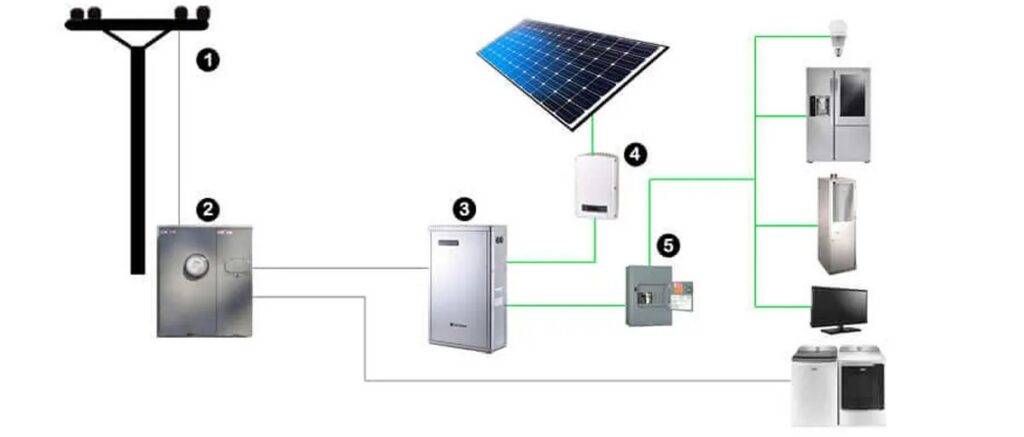
A home battery sits between your solar system, electrical panel, and the grid. When the sun is shining, solar powers the home and excess energy charges the battery. If the grid goes down, the battery disconnects the home from the utility and powers essential circuits. Once the grid returns, the system reconnects automatically.

For non-solar homes, batteries can still provide backup power by charging from the grid — though pairing with solar extends runtime and reduces grid dependency.

Diagram showing how a home battery backup works with solar panels, the electrical panel, and the grid to provide backup power during outages and store excess energy.

Frequently Asked Questions

Do I need solar to install a battery?

No. Batteries can charge from the grid, but pairing with solar offers longer backup duration and better resiliency.

Runtime depends on battery size, load configuration, and usage. Essential loads can run longer than whole-home setups.

Yes. Many homeowners add batteries after their initial solar installation.

It depends on system size and HVAC demand. Larger systems or multiple batteries are required for HVAC loads.

No. Batteries operate quietly and automatically.

Your proposal will include hardware specs, warranties, monitoring platforms, and performance details.

Begin Your Home Solar Review

See whether solar makes sense for your home, your roof, and your bill. Start with a quick assessment and we’ll handle the technical details. Note: Availability and timelines vary by location.

Vector illustration of a house with solar panels installed on its roof, representing residential solar energy.