Our Solar Process - Simple, Clear, and Guided

We guide homeowners across the United States through a clear solar process that covers assessment, proposal, permitting, installation, utility approval, and post-turn-on support. Headquartered in Chicago and serving homeowners nationwide, we provide no jargon, no pressure — just clarity and a well-managed experience.

A typical solar project takes several weeks due to permitting, inspections, and utility requirements. The install itself is fast; most of the timeline is administrative and coordination work handled on your behalf.

BrightHome Solar team member reviewing a homeowner’s electric bills in the office to assess solar feasibility.

Step 1

Assessment
(Bill + Remote Shading Review)

We begin by gathering your electric bill and reviewing your roof via satellite tools. This helps determine solar feasibility, production estimates, usable roof planes, and whether shading or roof age may impact system performance. If the numbers look good, we move to design and specifics.

Design & Proposal
(Layout, Production Estimate, Pricing)

You’ll receive a custom proposal that includes layout, equipment specs, system size, production modeling, incentives (if available), and pricing scenarios. We walk through cash vs financing options so you understand how solar may affect your bill, payback period, and long-term savings horizon.

Staff at BrightHome Solar designing a custom solar proposal for a homeowner, including layout and production estimates.

Step 2

BrightHome Solar staff submitting permits and scheduling the residential solar installation with local authorities.

Step 3

Permitting & Scheduling

Once approved, we handle permitting, interconnection applications, and coordination with your utility and local building department. After permits clear, we schedule the installation and review any final details related to roof access, setup, and expectations for install day. Note: Availability and timelines vary by location.

Installation Day

Most residential solar installs take 1–2 days depending on system size and roof type. Our team focuses on clean workmanship, proper flashing, code compliance, and neat equipment placement. Once complete, the system is tested and prepared for inspection.

Technician from BrightHome Solar installing solar panels on a homeowner’s roof for a clean and code-compliant setup.

Step 4

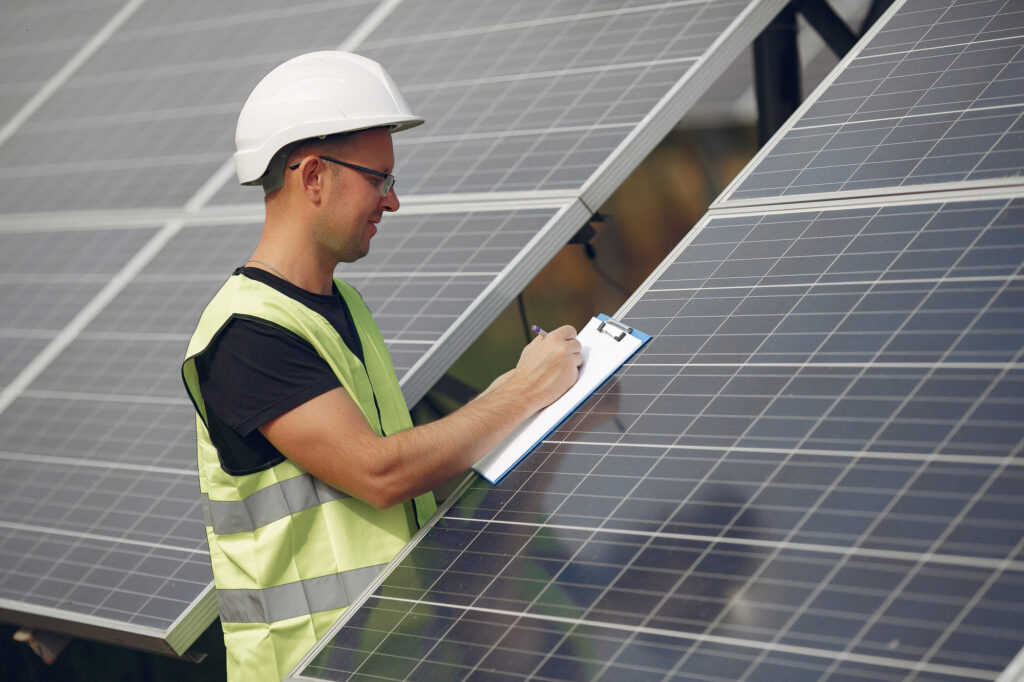
State inspector reviewing a home’s solar installation for approval and Permission to Operate (PTO).

Step 5

Inspection & PTO
(Permission to Operate)

Your system must pass both municipal inspection and utility review before it can be energized. Once the utility grants PTO, your home starts producing solar energy and your monitoring tools go live. This is the final handoff moment where your system officially becomes operational.

Monitoring & Support

After PTO, you can track system production and usage in real time via intuitive monitoring apps. Support remains available for questions related to performance, equipment, or billing interactions with the utility — especially during the first year as you get familiar with seasonal production patterns.

BrightHome Solar staff monitoring a homeowner’s solar system performance and energy production via real-time apps

Step 6

Begin Your Home Solar Review

See whether solar makes sense for your home, your roof, and your bill. Start with a quick assessment and we’ll handle the technical details. Note: Availability and timelines vary by location.

Vector illustration of a house with solar panels installed on its roof, representing residential solar energy.